An RFP for structural steel should include CAD, DXF, DWG or PDF drawings, a cut list or bill of materials, ASTM grades, AWS D1.1 welding requirements, AISC 303-22 tolerances, quantities, finish and a delivery date. A complete package lets every bidder price the same scope and reduces field rework.
Table of Contents
Why a Vague Bid Package Costs You on Site
Three steel bids came back on the same package, and the spread makes no sense. One excludes primer, another assumes field-drilled connections, and the third priced A36 where your drawings call for A992. Now you are leveling bids by phone while the crane date stays fixed.
Every gap in the bid documents becomes an assumption, and every assumption becomes a change order or rework once steel reaches the site. A precise RFP for structural steel closes those gaps before pricing starts, so fabricators in NC, SC and VA quote the same scope.
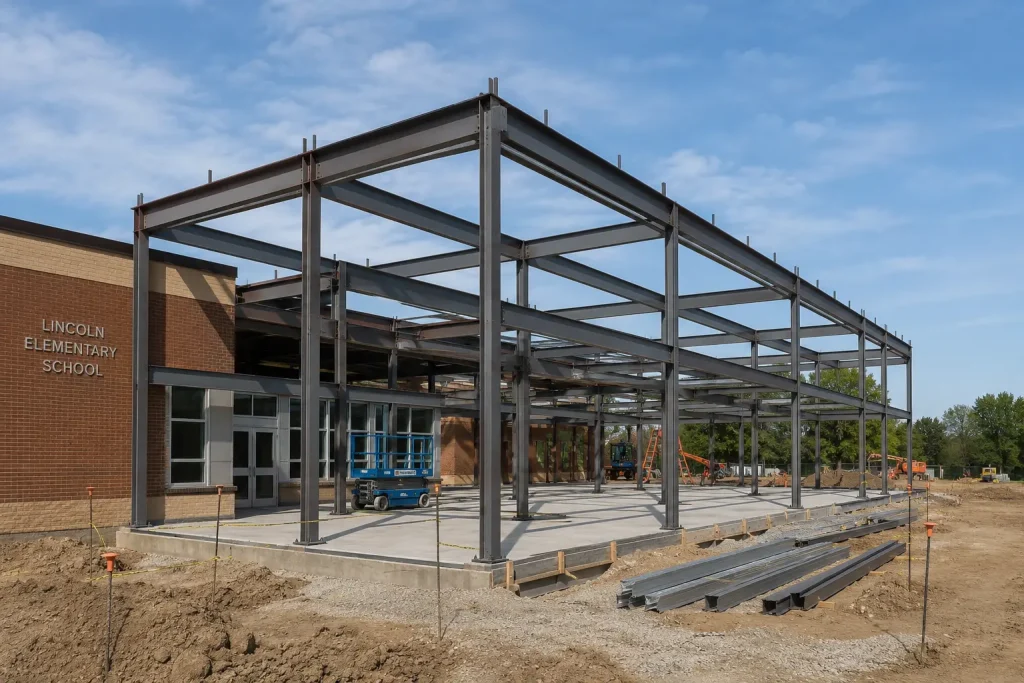
What Every RFP for Structural Steel Must Specify
Every RFP for structural steel must define material grades with mill test reports, fabrication tolerances under AISC 303-22, AWS D1.1 welding documentation and fabricator qualifications. These four items set a common baseline, so bids are comparable and the steel delivered fits its connections on site without field correction.
Material Specifications and Mill Test Reports
Name the ASTM grade for each member type: A992 for wide-flange beams and columns, and A572 Grade 50 or A36 for plates and angles, as your engineer of record specifies. Require mill test reports (MTRs) for every heat so each piece can be traced to its source. If members face weather or corrosive exposure, state the finish now: shop primer, hot-dip galvanizing or a specified paint system. Finish changes after award usually become change orders.
Cutting, Forming and Fabrication Tolerances
ANSI/AISC 303-22, the Code of Standard Practice, governs fabrication and erection tolerances whenever the contract documents are silent. If your project needs tighter values, list them by member in the RFP for structural steel. State whether parts require CNC cutting and drilling, and whether bent plates need press brake forming with a minimum bend radius.
Welding Procedures and AWS Requirements
Require qualified welders and written Welding Procedure Specifications (WPS) under AWS D1.1, with Procedure Qualification Records (PQR) where procedures are not prequalified. Welded aluminum components fall under AWS D1.2; for those, Richards Aluminum fabricates aluminum railing systems and aluminum ladder systems to project specifications. In our shop, structural welds are made with FCAW under documented procedures, so every weld traces back to an approved WPS.
Fabricator Qualification and Shop Fit-Up
Ask every bidder for proof of AISC certification and its category, and verify it in the AISC directory before award. Our comparison of AISC certified vs non-certified fabricators explains what changes in inspection and risk. For long-span trusses or complex frames, require a shop trial fit-up so bolt-hole alignment is confirmed before anything ships.
| Specification | What to Write in the RFP | Where It Applies | Priority | Reference |
|---|---|---|---|---|
| Material and MTRs | ASTM A992 or A572 Gr 50, MTR for every heat | Beams, columns, frames | Critical | ASTM grades per EOR specs |
| Fabrication tolerances | AISC 303-22, or tighter values listed by member | Base plates, bolted connections | Critical | ANSI/AISC 303-22 |
| Certified welding | Approved WPS and PQR, qualified welders | Moment connections, built-up members | Critical | AWS D1.1 |
| Shop fit-up | Trial assembly and hole alignment check | Long-span trusses, complex frames | Project dependent | Contract documents |
Not sure your bid package is complete?
Send your drawings and draft RFP to our estimating team for a scope review before it goes out to bid.
How to Adapt Your RFP for Structural Steel to the Project Type
Adapt your RFP for structural steel to the service environment. Heavy framing needs load, fatigue and blast-cleaning requirements; stainless or exposed steel needs finish and contamination controls; machined assemblies need GD&T and stress relief. Stating this upfront keeps bidders from pricing the wrong process and protects inspection results.
Heavy Framing and Carbon Steel
For warehouses, crane runways and equipment supports, specify surface preparation such as SSPC-SP 10 near-white blast cleaning before primer. Make connection design responsibility explicit: the engineer of record, or delegated design by the fabricator.
Stainless and Architecturally Exposed Steel
Specify Type 304 or 316L where required, the surface finish, and separation from carbon steel tools to prevent iron contamination. If steel will be exposed to view, identify it as AESS so bidders price the finish level rather than standard framing.
Complex Assemblies with Machined Features
Machine bases need GD&T callouts and a note on whether stress relief is required before final machining. Ask bidders which operations they perform in house and which they subcontract.
| Category | Key RFP Requirement | Typical Projects | Compliance Reference |
|---|---|---|---|
| Heavy framing | Fatigue, connection design responsibility, SSPC-SP 10 | Plants, logistics hubs, crane runways | AISC 303-22, AWS D1.1 |
| Stainless and exposed steel | Grade, finish, contamination control, AESS category | Food, pharma, architectural | ASTM A240, AISC 303-22 Section 10 |
| Machined assemblies | GD&T, stress relief, machining scope | Machine bases, gate structures | Project drawings |
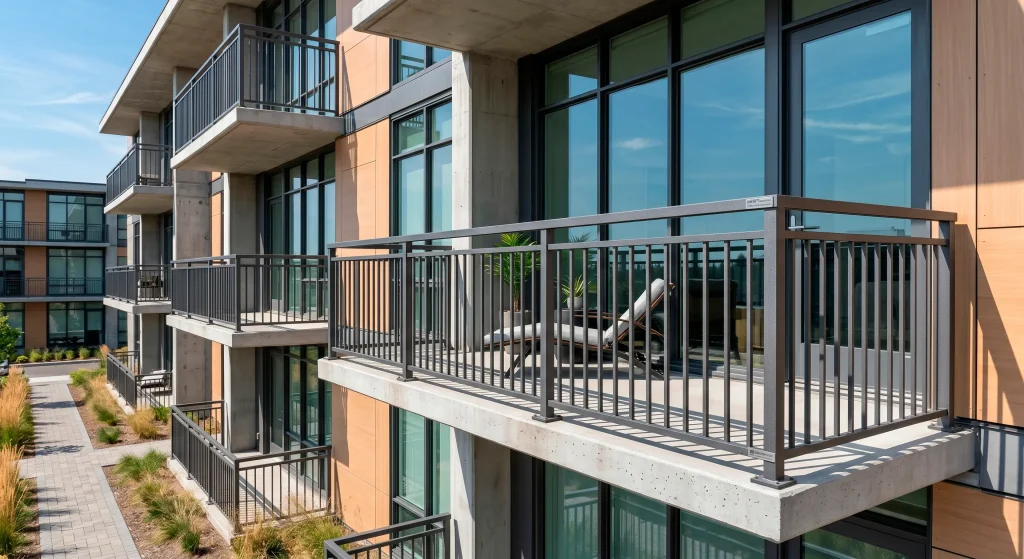
Quality Control Requirements to Write Into the Bid
Defining strict quality control requirements directly in your structural steel RFP, such as specific weld testing percentages and dimensional tolerances, ensures accurate, comparable pricing and eliminates post-award disputes.
Write the inspection scope into the RFP for structural steel instead of leaving it to each bidder. Define visual weld inspection, the percentage of UT or MT testing on complete-joint-penetration welds, dimensional checks and coating thickness readings. Every bid then carries the same QC cost, and disputes after award drop.
Inspection and Documentation to Request
- Visual inspection (VT): all welds checked to AWS D1.1 acceptance criteria by a qualified inspector.
- Nondestructive testing: list which joints need UT, MT or PT and at what percentage. Testing left out of the RFP for structural steel often becomes a cost dispute.
- Dimensional checks: critical dimensions, squareness and hole spacing verified before coating.
- Coating QC: surface profile after blasting and dry film thickness for each coat.
RFP for Structural Steel Checklist Before You Request Bids
A comprehensive structural steel RFP checklist ensures all project specifications, design documents, and compliance requirements are clearly defined before bidding. Reviewing these elements upfront guarantees faster, comparable bids and prevents unexpected change orders.
Use this RFP for structural steel checklist before the package goes out. It covers project overview, design documents, materials, fabrication, delivery and compliance. A complete package gets faster, comparable bids and lowers the risk of scope gaps turning into change orders after award.
Project overview
☐ Project name, location and bid due date
☐ Scope: fabrication only, or fabrication and erection
Design documents
☐ CAD, DXF, DWG or PDF drawings at the current revision
☐ Cut list or bill of materials with quantities
Materials
☐ ASTM grade for each member type
☐ MTR requirement for every heat
☐ Finish system and surface preparation
Fabrication
☐ AISC 303-22 tolerances, or tighter values by member
☐ AWS D1.1 WPS and PQR documentation
☐ Shop fit-up requirements for complex frames
Delivery and logistics
☐ Target delivery date and erection sequence
☐ Staged delivery needs and site access limits
Compliance
☐ AISC certification category required
☐ Inspection and NDT scope
To set a budget before bids arrive, check our breakdown of structural steel cost per ton in NC, SC and VA.
Why Richards Welding Reviews Your RFP Before Pricing
Having an experienced fabricator review your RFP before pricing identifies missing specifications, design conflicts, and scope gaps early. This upfront technical review guarantees accurate, all-inclusive quotes and prevents unexpected delays or cost overruns during fabrication.
Richards Welding is an AISC certified fabricator in Dunn, NC that reviews bid packages for contractors in North Carolina, South Carolina and Virginia. Our estimating team flags missing grades, tolerances or weld requirements before pricing, so the quote covers the full scope and holds through fabrication and delivery.
Under one roof we handle CNC cutting, press brake forming and AWS-compliant FCAW welding, plus assembly, QC inspection and staged freight delivery. When an RFP for structural steel reaches our estimating team, we check the drawings against the cut list and specs and ask about gaps before we price. If your schedule is tight, our guide to structural steel fabrication lead times shows how to plan release dates.

Frequently Asked Questions About an RFP for Structural Steel
What should be included in an RFP for structural steel fabrication?
Include CAD, DXF, DWG or PDF drawings, a cut list or bill of materials, ASTM grades, finish, AISC 303-22 tolerances, AWS D1.1 welding requirements, inspection scope, quantities and the target delivery date. Missing items force bidders to assume, which makes bids hard to compare.
Can I get a structural steel quote without final drawings?
Often yes, as a budget range. Many fabricators can price from preliminary drawings or a cut list. Treat that number as a planning figure; the firm quote follows once drawings are issued for construction.
Which NDT methods should a structural steel bid include?
Require visual inspection on all welds, then specify UT or MT testing for complete-joint-penetration welds and joints under tension or cyclic loads. State the percentage of each method so all bidders carry the same inspection cost.
Should I send the same RFP for structural steel to every fabricator?
Yes. An identical package makes prices comparable. Ask each bidder to list its assumptions and exclusions; those lists show how carefully each fabricator read your specifications.

Conclusion
A complete RFP for structural steel defines grades, tolerances, welding procedures and inspection scope before anyone prices it, so you compare like for like and avoid rework in the field. The fewer assumptions a bidder has to make, the closer the final invoice stays to the number you approved.
Your RFP is ready. Get a scope-complete quote.
Send your drawings, cut list and specs to Richards Welding in Dunn, NC, or call (919) 438-6103.
Prefer email or phone? Write to terry@richardsmetalfabrication.com or call (919) 438-6103. Richards Welding & Metal Fabrication, 109 East Devine St., Dunn, NC 28334.
Written by: Richards Welding Estimating Team · Last updated: October 20, 2026
Sources
- American Institute of Steel Construction, ANSI/AISC 303-22, Code of Standard Practice for Steel Buildings and Bridges (2022): https://www.aisc.org/globalassets/aisc/publications/standards/a303-22w.pdf
- AISC Certification Program: https://www.aisc.org/certification/
- American Welding Society, AWS D1.1 Structural Welding Code, Steel, and AWS D1.2, Structural Welding Code, Aluminum: https://www.aws.org
- ASTM International, A992/A992M Standard Specification for Structural Steel Shapes: https://www.astm.org