Quick Answer: In 2026, AISC certified fabricators are audited every year against the AISC 207 standard, so their quality systems, welding procedures and inspection records are already verified. Non-certified fabricators may build good steel, but the owner usually pays for extra third-party shop inspections, more submittal review and higher schedule risk.
When a general contractor compares bids for a structural steel package, the numbers on the page rarely tell the whole story. Two fabricators can quote the same tonnage and similar lead times, yet deliver very different projects. One of the clearest dividing lines is the AISC certified vs non-certified fabricator question. It shapes how quality is proven, who pays for inspections, how many documents your team reviews, and how smoothly steel goes up in the field.
At Richards Metal Fabrication, we fabricate and erect structural steel for multifamily, hotel, hospital and commercial projects across North Carolina, South Carolina and Virginia. We are AISC certified, and our welding follows AWS requirements. In this guide we explain, in plain terms, what certification actually changes for your project, where the hidden costs of a non-certified shop appear, and what you should request from any fabricator before you award the work.
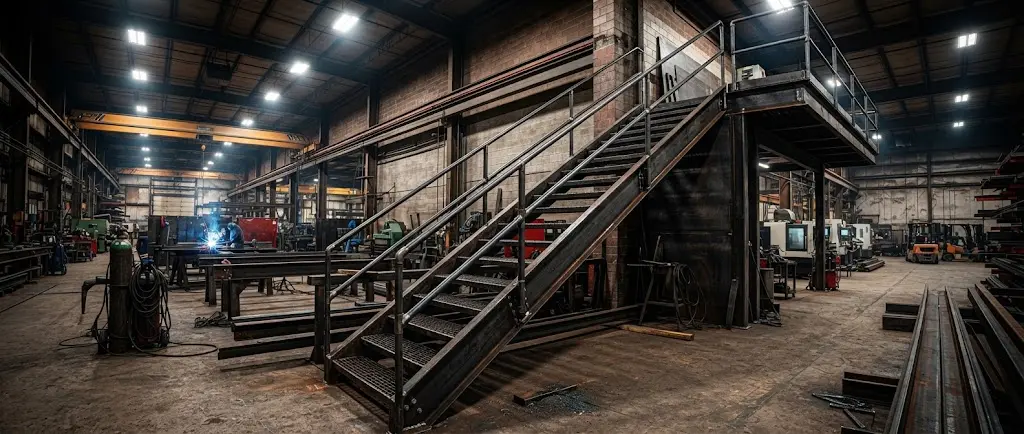
What AISC Certification Means for Steel Fabricators
Quick Answer: AISC certification is a third-party verification that a fabricator runs a documented quality management system, qualified personnel and controlled processes. Companies are audited annually under AISC 207, and certification covers specific categories, such as building fabrication or steel erection, so general contractors should always confirm the exact category.
The American Institute of Steel Construction (AISC) runs a certification program designed specifically for the steel industry. It is not a general business badge. It evaluates whether a fabricator can consistently produce steel that matches the contract documents, and whether the company can prove it with records.
The Standard Behind the Certificate
Certification is governed by AISC 207, the Standard for Certification Programs. An independent auditor reviews the fabricator’s operations on site, and the company must pass these audits on a recurring basis to keep its status. Auditors look at:
- Quality management system: written procedures, document control, and how the shop handles nonconforming work.
- Personnel qualifications: training records for fitters, welders, inspectors and detailers.
- Material traceability: how mill certificates are matched to the pieces that ship.
- Welding controls: welding procedure specifications (WPS) and welder qualifications aligned with AWS D1.1, Structural Welding Code – Steel.
- Inspection and corrective action: how errors are caught, documented and prevented from repeating.
In short, certification proves the process works before your steel ever reaches the shop floor.
Certification Categories General Contractors Should Recognize
Not every certificate covers the same scope. A fabricator certified for one category is not automatically certified for another, so it pays to read the certificate carefully.
Building Fabricator Certification
This is the category most relevant to commercial buildings. It covers structural framing such as beams, columns, moment frames, braced frames, stairs and embedded items for multifamily, hospitality, healthcare, office and industrial structures.
Steel Erector Certification
AISC also certifies erectors, evaluating safety programs, connection installation, bolting practices and field quality control. When the fabricator and erector are the same company, a single quality system covers the steel from the shop to the final bolt.
Bridge and Specialty Categories
Bridge, hydraulic and component manufacturer categories exist for specialized work. For a typical commercial building, they matter less than confirming the building fabricator category is current and tied to the facility that will actually produce your steel.
AISC Certified vs Non-Certified Fabricators: Side-by-Side Comparison
Quick Answer: The core difference is who proves quality and when. Certified fabricators demonstrate it before the job through audited systems; non-certified fabricators must demonstrate it during the job, typically through special inspections required by IBC Chapter 17. That shift moves cost, paperwork and risk onto the owner and contractor.
The following comparison summarizes what typically changes on a commercial steel package:
| Factor | AISC Certified Fabricator | Non-Certified Fabricator |
|---|---|---|
| Quality system | Documented and audited by a third party | Varies; may be informal or undocumented |
| In-plant special inspection | Typically waived when the fabricator is approved by the building official | Usually required and billed to the project |
| Welding documentation | WPS and welder qualifications on file and audited | Must be produced and reviewed per project |
| Material traceability | Verified during audits | Depends on the shop’s own practices |
| Specification compliance | Meets common certification requirements in project specs | May require a variance or substitution request |
| Submittal review effort | Standardized, predictable packages | Often more review cycles and RFIs |
| Schedule risk | Lower; issues are caught in the shop | Higher; issues are often found in the field |
How the Building Code Treats Each Option
The International Building Code, adopted with amendments in North Carolina, South Carolina and Virginia, addresses shop fabrication in Section 1704.2.5. In practical terms, when structural load-bearing members are fabricated in a shop, special inspections of that fabrication are required unless the fabricator has been approved by the building official. AISC certification is the most widely accepted evidence for that approval.
What This Means for Your Inspection Budget
With a certified fabricator, the fabricator typically submits a certificate of compliance at the end of the work, and in-plant inspection visits are not required. With a non-certified fabricator, a special inspector may need to visit the shop repeatedly, review welds and verify materials. Those visits are billed to the project, and any rejected work adds return trips.
Quality Control vs Quality Assurance
AISC 360, Specification for Structural Steel Buildings, separates quality control (QC), performed by the fabricator, from quality assurance (QA), performed by agencies working for the owner. A certified shop has a proven QC program, which lets QA focus on verification instead of discovery. A non-certified shop often relies on QA to find problems, which is slower and more expensive for everyone.
Documentation and Requirements to Request From Any Fabricator
Quick Answer: Before awarding a steel package, request the fabricator’s current certificate or audit evidence, written quality manual, welding procedure specifications, welder qualification records, material traceability process, safety metrics and insurance. A certified shop can usually produce this package within days; a non-certified shop may need weeks or outside help.
A strong subcontractor prequalification process protects your schedule long before steel arrives. We recommend requesting the following from every fabricator on your bid list:
| Document | Why It Matters |
|---|---|
| Current AISC certificate (category and facility) | Confirms the certified scope and location |
| Quality manual | Shows how errors are prevented and corrected |
| Welding procedure specifications (WPS) | Proves weld procedures match AWS D1.1 |
| Welder qualification records | Confirms each welder is qualified for the positions required |
| Material traceability process | Links mill certificates to shipped pieces |
| Safety record (EMR, OSHA logs) | Indicates field risk, especially if the fabricator also erects |
| Insurance certificates | Protects the project against loss and liability |
| Project references of similar scope | Demonstrates experience with comparable buildings |
Red Flags During Bid Review
Vague Answers About Inspection
If a fabricator cannot clearly explain who pays for shop inspections or how they will be scheduled, that cost will likely land on your project later.
Certificates That Do Not Match the Shop
Certification is tied to a specific facility. If the company has several locations, confirm that the certified facility is the one fabricating your steel.
Unusually Low Pricing Without Clarifications
A bid far below the others, with no exclusions related to inspection, testing or detailing, often signals scope that has not been fully priced.
Cost and Lead Time Impact: What the Numbers Show in NC, SC & VA
Quick Answer: A non-certified fabricator’s lower bid can be offset by in-plant special inspection fees, commonly $85 to $150 per inspector hour plus travel, extra submittal cycles and rework risk. On commercial projects in North Carolina, South Carolina and Virginia, those hidden costs can quickly erase a modest price difference.
Price matters, and we understand that procurement teams must defend every number. The key is to compare total installed cost, not just the fabrication line item.
Where Hidden Costs Appear
- Special inspection: recurring shop visits, travel time and report preparation, all billed by the hour.
- Rework: a misfabricated connection fixed in the field can cost several times more than the same correction made in the shop, plus crane and crew standby time.
- Extra review cycles: each rejected submittal adds days for the engineer of record and your project team.
- Schedule slippage: delays in steel affect decking, MEP rough-in, framing and, ultimately, occupancy.
As a planning reference, fabricated and erected structural steel for commercial buildings in the Southeast commonly falls in a broad range of roughly $3,500 to $6,500 per ton, depending on connection complexity, tonnage, finishes and site conditions. These are planning ranges, not quotes, but they show why a few avoidable inspection days or a single rework event can shift the economics of a bid.
Typical Lead Time Components
Lead time is where certified systems often prove their value. Typical windows for a mid-size commercial package include:
- Shop drawings and approvals: 3 to 6 weeks, depending on review turnaround.
- Material procurement: 2 to 8 weeks, depending on mill rolling schedules and service center stock.
- Fabrication: 4 to 10 weeks, depending on tonnage and complexity.
- Erection: scheduled in sequences aligned with the general contractor’s plan.
Certified fabricators tend to hold these windows more reliably because detailing, procurement and production follow documented procedures. For practical strategies, see our guide on how to manage lead times in structural steel projects.
Coatings and Finishes Add Their Own Timeline
Surface preparation, primers and galvanizing each add time and require inspection. A certified quality system documents surface preparation and coating thickness, which is essential for durability. Learn more about corrosion protection for structural steel and how coating decisions affect long-term performance.
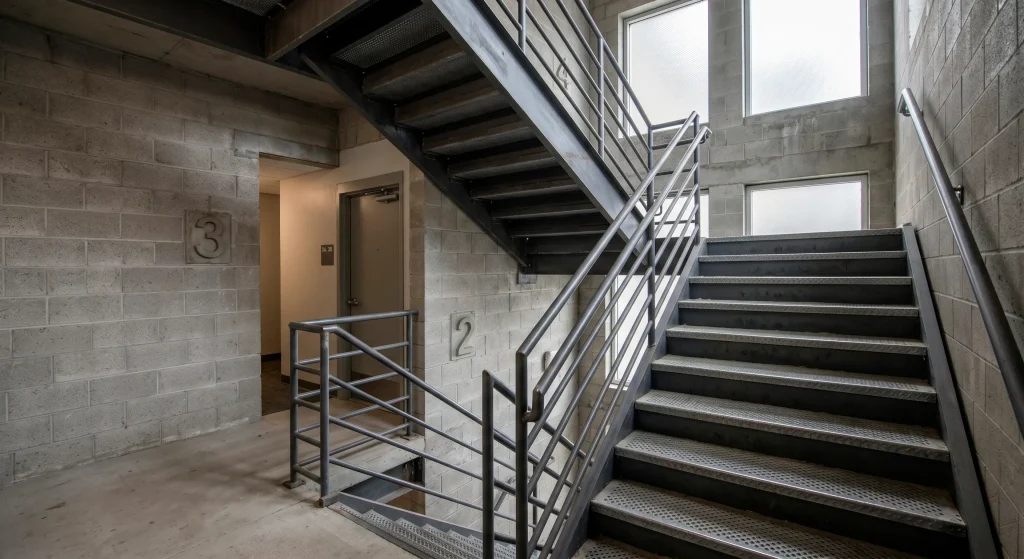
How Certification Shows Up on the Jobsite
Quick Answer: Certification also affects the field. Members built under a controlled quality system arrive with correct piece marks, verified dimensions and documented welds, so erection crews set steel faster, crane picks stay on schedule and punch lists shrink. Fewer field fixes mean fewer change orders for the general contractor.
The real test of any fabricator happens when the first truck arrives on site. Pieces must match the erection drawings, bolt holes must line up, and every member must be where the crane expects it.
Erection Sequencing and Crane Time
Crane time is one of the most expensive resources on a steel project. When pieces arrive in the correct sequence and fit the first time, picks stay efficient. Our article on how to streamline on-site crane coordination explains how shop quality and delivery planning work together to protect your schedule.
Multifamily, Hotels and Hospitals
These project types share tight schedules and demanding owners. In hotel and hospitality construction, opening dates are often fixed months in advance, so steel delays ripple directly into revenue. Hospitals add stricter inspection requirements and owner oversight. In both cases, a certified fabricator gives the owner’s team documented confidence instead of assumptions.
When a Non-Certified Fabricator Might Still Fit
Quick Answer: A non-certified fabricator can be a reasonable choice for miscellaneous metals, small non-structural items or private projects where specifications do not require certification. For primary structural framing on multifamily, hospitality, healthcare or public work, many specifications and owners expect certification, and the risk of skipping it rises sharply.
We believe in giving our clients an honest picture. Many skilled non-certified shops produce quality work, especially on small, low-risk scopes. The question is not whether a shop can build good steel, but whether your project can afford to verify it during construction rather than before. When the steel is part of the primary structure, the answer is usually clear.
Frequently Asked Questions
Quick Answer: These are the questions general contractors, developers and procurement teams ask us most often when comparing AISC certified and non-certified fabricators for commercial projects across North Carolina, South Carolina and Virginia. Each answer is short and direct so your team can apply it during bid review.
Does the building code require an AISC certified fabricator?
Not directly. IBC Section 1704.2.5 requires special inspection of shop-fabricated structural members unless the fabricator is approved by the building official. AISC certification is the most widely accepted evidence for that approval, so a certified shop typically removes the in-plant inspection requirement. Always confirm with the local jurisdiction and project specifications.
How can I verify that a fabricator is really AISC certified?
Search the company in AISC’s online certified company directory and confirm the category, facility location and status. Certification applies to a specific facility, so a company with several shops may have only one certified. Request the current certificate and compare it with the facility that will fabricate your steel.
Is an AISC certified fabricator always more expensive?
Not necessarily. Certified fabricators sometimes bid slightly higher because they carry audit, training and documentation costs. However, eliminating third-party shop inspections, reducing rework and protecting the erection schedule often makes the total installed cost equal or lower. Compare complete project cost, not only the fabrication line item.
Conclusion
Quick Answer: Choosing between AISC certified and non-certified fabricators is really a choice about where risk sits. Certification shifts quality verification upstream, reduces inspection costs and protects schedule. For structural steel on commercial work in the Southeast, it is the most reliable signal that a fabricator can deliver as specified.
The AISC certified vs non-certified fabricator decision affects far more than a line on your bid tabulation. It determines who proves quality, who pays for inspection, how many documents your team reviews and how predictably your steel goes up. Certified fabricators bring audited systems, qualified welders, traceable materials and a track record that building officials and owners already trust.
At Richards Metal Fabrication, we combine AISC certified fabrication with in-house erection for multifamily, hotel, hospital and commercial projects throughout North Carolina, South Carolina and Virginia. From our facility in Dunn, NC, we help general contractors and developers keep steel packages compliant, on budget and on schedule.
Join our social networks to stay updated with our latest news and events. Don’t miss out on anything and follow our accounts today! Contact us!