When a structural steel project falls behind schedule, the root cause is rarely the steel itself. It’s almost always the logistics surrounding it — and nowhere is that more true than with crane operations. A single miscalculated lift sequence, a crane parked in the wrong spot, or a delivery truck arriving before the hook is free can cascade into days of lost production. We’ve seen it happen on job sites across North Carolina, South Carolina, and Virginia, and we’ve also seen how the right planning eliminates it entirely.
Crane logistics is where engineering, scheduling, and site coordination collide. Get it right, and erection crews move through a building at a predictable, efficient pace. Get it wrong, and every trade behind steel — decking, framing, MEP rough-in — inherits the delay. This article breaks down how experienced fabricators and erectors approach crane logistics planning, from pre-mobilization through the final pick, so general contractors and developers can build a tighter, more reliable schedule.
Why Crane Logistics Make or Break the Erection Schedule
Crane logistics refers to the full coordination effort behind a crane’s presence on site: its position, reach, capacity, access routes, staging areas, and the sequencing of every pick it performs. It sounds mechanical, but in practice it’s one of the most strategic parts of structural steel planning.
The Hidden Cost of Poor Crane Planning
A crane that has to be repositioned mid-project doesn’t just cost the rental fee for downtime — it costs the entire crew standing idle, the trucking schedule that now has to be renegotiated, and often a domino effect on trades scheduled to follow. On tight urban sites, where laydown space is already limited, a poorly planned crane location can bottleneck an entire project.
We consistently find that projects with detailed crane logistics plans finish erection faster and with fewer safety incidents than those where crane positioning is decided reactively on site. This is especially true on multifamily and hospitality projects, where compressed timelines leave little room for recovery.
Site Constraints That Complicate Crane Placement
Every job site presents its own set of variables:
- Limited footprint — urban infill and tight multifamily sites often leave only one viable crane pad
- Overhead obstructions — power lines, adjacent structures, and site conditions that restrict boom swing
- Ground bearing capacity — soil conditions that may require mats or additional site prep before a crane can be safely positioned
- Access and staging — how steel arrives, where it’s stored temporarily, and how it moves from truck to hook
Addressing these constraints before mobilization, rather than during it, is what separates a smooth erection sequence from a chaotic one.

Building a Crane Logistics Plan That Actually Works
A strong crane logistics plan isn’t a single document — it’s a coordinated sequence of decisions made well before the first beam arrives on site.
Step One: Lift Study and Crane Selection
Before anything else, we evaluate the heaviest and most awkward picks on the project — typically long-span beams, roof trusses, or steel stairs — and use them to determine the crane’s required capacity and reach at various radii. This is also where structural steel requirements for the specific building type come into play, since hospital and hotel structures often carry different load and clearance considerations than standard multifamily framing.
Selecting a crane based on the average pick, rather than the heaviest one, is one of the most common planning mistakes we encounter. It’s a shortcut that almost always requires an expensive mid-project correction.
Step Two: Sequencing the Steel Delivery
Crane efficiency depends entirely on having the right piece available at the right moment — not too early, and not late enough to stall the hook. This is where erection sequencing and delivery logistics have to be planned together, not in isolation.
Coordinating Truck Arrivals with Pick Sequence
Just-in-time delivery only works when the erection sequence is mapped out piece by piece in advance. We build delivery schedules around the actual pick order, so trucks arrive in the sequence steel will be hoisted — minimizing on-site storage needs and keeping the crane in constant, productive motion. Because lead times in structural steel can shift due to mill schedules or fabrication volume, this sequencing has to be built with some flexibility, not treated as a fixed script.
Managing Laydown Areas on Congested Sites
When space doesn’t allow for a full delivery-to-pick flow, a secondary laydown area becomes essential. The key is keeping that laydown zone within efficient crane reach, so pieces can move from storage to final position without a second crane or excessive reposition time.
Step Three: Confirming Access and Ground Conditions
Crane pads need to be engineered for the specific load they’ll bear, particularly on sites with fill soil, recent excavation, or proximity to underground utilities. We coordinate directly with civil and geotechnical teams to confirm ground bearing capacity before the crane ever arrives, avoiding the costly surprise of a crane pad that needs rework mid-mobilization.
Coordinating Crane Logistics with the Broader Project Team
Crane logistics doesn’t happen in a vacuum. It touches nearly every stakeholder on a commercial construction project, and communication gaps between them are where schedule risk hides.
[Aligning with the General Contractor’s Master Schedule
The erection sequence has to sync with the GC’s overall project timeline — including concrete pours, foundation readiness, and the availability of other trades working nearby. We treat this alignment as an ongoing conversation rather than a one-time handoff, updating the crane logistics plan as site conditions or schedule shifts occur.
Working with Subcontractors Around the Crane’s Footprint
On active job sites, multiple trades often need access to the same congested areas the crane occupies. Clear, early communication about crane swing radius, staging zones, and daily lift windows prevents conflicts before they start. This is one of the reasons subcontractor prequalification matters — erectors who understand multi-trade coordination bring far fewer surprises to a congested site.
Safety Zones and Exclusion Areas
Every crane logistics plan should define clear exclusion zones during active lifts, communicated to every trade on site — not just the erection crew. This isn’t optional; it’s a fundamental safety requirement that also happens to keep the schedule moving, since incidents and near-misses are among the most disruptive schedule risks on any job.
Protecting Steel and Schedule Through Smart Logistics
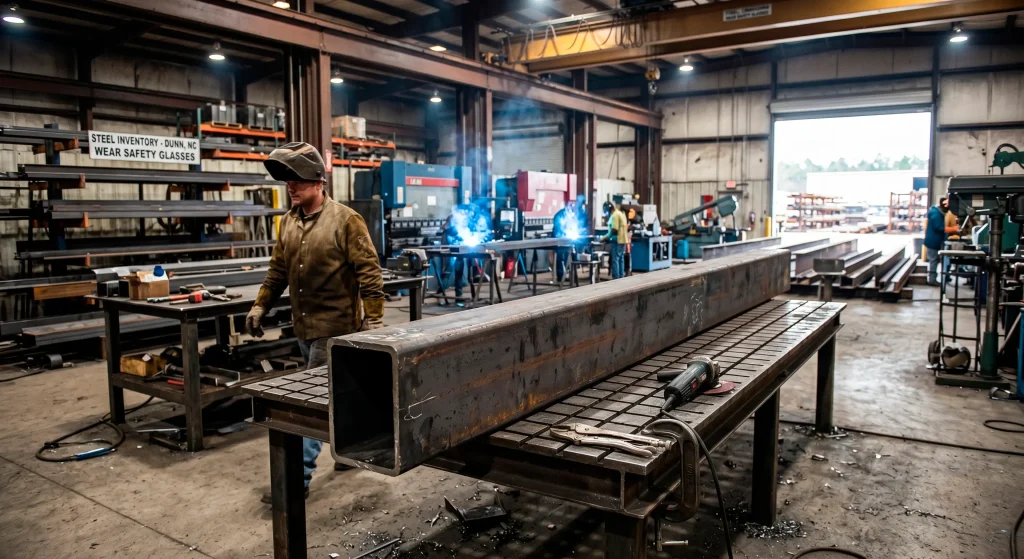
Efficient crane logistics also intersects with material protection. Steel that sits exposed in a laydown yard for weeks, waiting on a delayed pick, is more vulnerable to the elements — which is part of why sequencing and corrosion protection go hand in hand. Partnering with a shop offering structural steel fabrication services that sequences and stages deliveries for crane efficiency eliminates this exposure risk before it starts. Reducing the time steel spends staged outdoors, and following proper corrosion prevention practices for any material that must be stored longer term, protects both the schedule and the long-term performance of the structure.
Weather Contingencies in Crane Planning
Wind restrictions, in particular, can shut down crane operations with little notice. A resilient logistics plan builds in contingency days and identifies which picks can be reshuffled if a weather delay hits mid-sequence, so the entire schedule doesn’t grind to a halt over a single lost day.
Frequently Asked Questions
How far in advance should crane logistics planning begin?
Ideally, crane logistics planning starts during the preconstruction phase, alongside steel detailing and fabrication scheduling — often 8 to 12 weeks before erection begins. This allows time to resolve site access issues, confirm ground conditions, and align delivery schedules with the pick sequence.
Who is responsible for crane placement on a commercial construction site?
Crane placement is typically a collaborative decision between the erector, the general contractor, and the crane operator or rental company, with site engineering input on ground conditions. The erector usually leads the lift study and sequencing plan, since it directly ties to fabrication and delivery scheduling.
What’s the biggest cause of crane logistics delays on multifamily or hospitality projects?
The most common cause is underestimating site congestion — tight urban footprints combined with overlapping trade schedules. Projects that plan crane logistics before mobilization, rather than adjusting reactively, consistently avoid the delays that catch less-prepared crews off guard.
Conclusion
Crane logistics is often treated as a scheduling afterthought, when it should be one of the earliest and most carefully engineered pieces of a structural steel project. From lift studies and delivery sequencing to ground conditions and multi-trade coordination, every decision made before mobilization pays dividends once erection begins. If you’re building a hotel, multifamily, or hospital project across NC, SC, or VA and need a fabrication partner who plans for the crane from the first shop drawing, add us to your bid list — our estimating team responds immediately.
Join our social networks to stay updated with our latest news and events. Don’t miss out on anything and follow our accounts today! Contact us!