Structural steel is the backbone of most industrial buildings, from warehouses and manufacturing plants to distribution centers and processing facilities. A steel fabricator converts engineered drawings into fabricated members delivered to your site. This article explains what that process involves and what to expect from a certified fabricator.
Table of Contents
What Should You Know About Industrial Structural Steel?
Key takeaways
- Industrial structural steel includes primary framing, secondary framing, bracing, base plates, anchor rods and access steel such as mezzanines and stairs.
- The fabricator turns approved drawings into shop drawings and fabricated members; the erector installs them on site.
- AISC certification shows that a fabricator’s quality system passed an independent audit.
- Fabrication typically takes 8 to 14 weeks from approved shop drawings, depending on project scope.
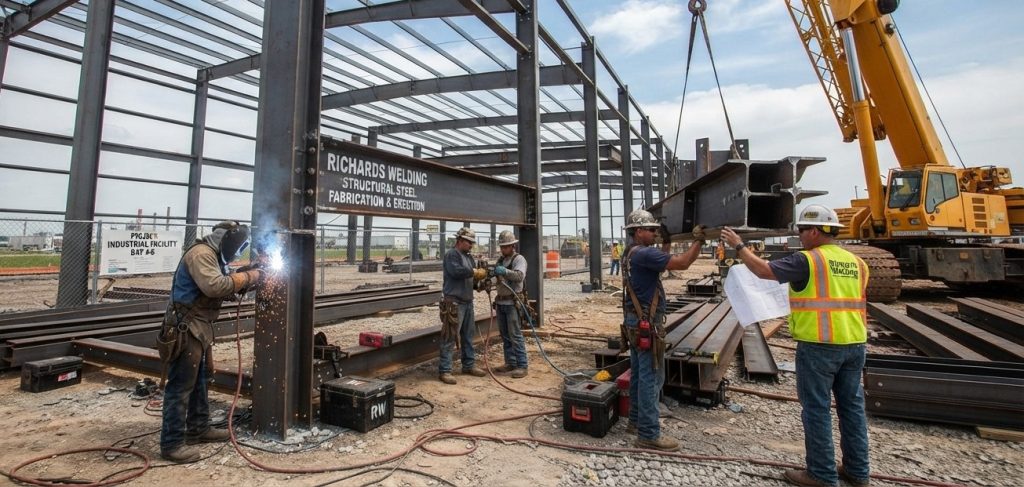
What Structural Steel Components Does an Industrial Building Require?
An industrial building requires primary framing, secondary framing, bracing, base connections and access steel. Primary framing carries the main loads, secondary framing supports the roof and walls, and bracing resists wind and seismic forces. Mezzanines, platforms and stairs add working levels and safe access.
| Component | Function | Typical material |
| Columns | Carry roof, crane and floor loads down to the foundation | Wide-flange (W) shapes or HSS |
| Beams and girders | Span between columns and support roof or floor framing | Wide-flange shapes |
| Purlins and girts | Support roof and wall cladding | Cold-formed C or Z sections |
| Bracing | Resists wind and seismic lateral loads | Angles, HSS or rods |
| Base plates and anchor rods | Transfer column loads into the foundation | Steel plate; ASTM F1554 anchor rods |
| Mezzanines and platforms | Add working levels and equipment access | Wide-flange shapes, plate, grating |
| Stairs, ladders and guards | Provide code-compliant access | Channel, plate, pipe and tube |
Common grades for industrial structural steel are ASTM A992 for wide-flange shapes, ASTM A500 for HSS, and ASTM A36 for plates and angles. The engineer of record sets the final grades in the structural drawings. For elevated work areas, see our guide to steel mezzanine fabrication in North Carolina.
AISC Certified · NC, SC & VA
Have an Industrial Building Project in NC, SC or VA?
Send your structural drawings for a quote on your steel package. Our estimating team responds within 24 hours.
Request a Steel Package QuoteThe Role of the Fabricator in an Industrial Steel Project
The fabricator’s role in an industrial steel project is to turn the engineer’s issued-for-construction (IFC) drawings into finished, documented steel members. That covers detailing, cutting, welding, surface preparation and delivery. The erector then sets the steel in place on site.
- Receive IFC drawings. The fabricator reviews the structural drawings and specifications for scope, grades and connection types.
- Produce shop drawings. Detailers draw every member and connection, then submit the drawings for engineer and GC approval.
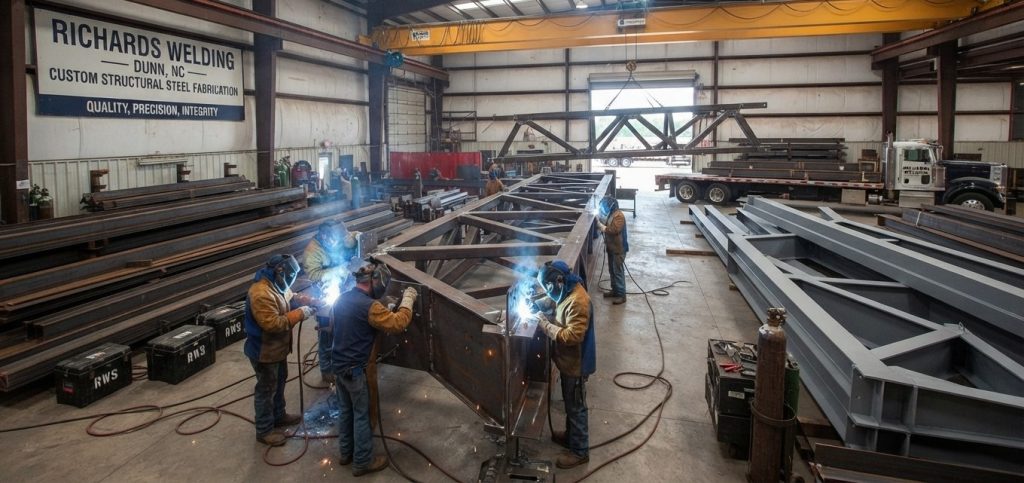
- Fabricate the members. Steel is cut, drilled and welded to AWS D1.1, with in-process quality checks.
- Apply surface treatment. Members receive the specified preparation, primer or coating before shipping.
- Deliver to site. Steel ships in the sequence the erector needs, with mill test reports and weld records.
- Support the erector. The fabricator answers field questions and corrects any fit-up issues.
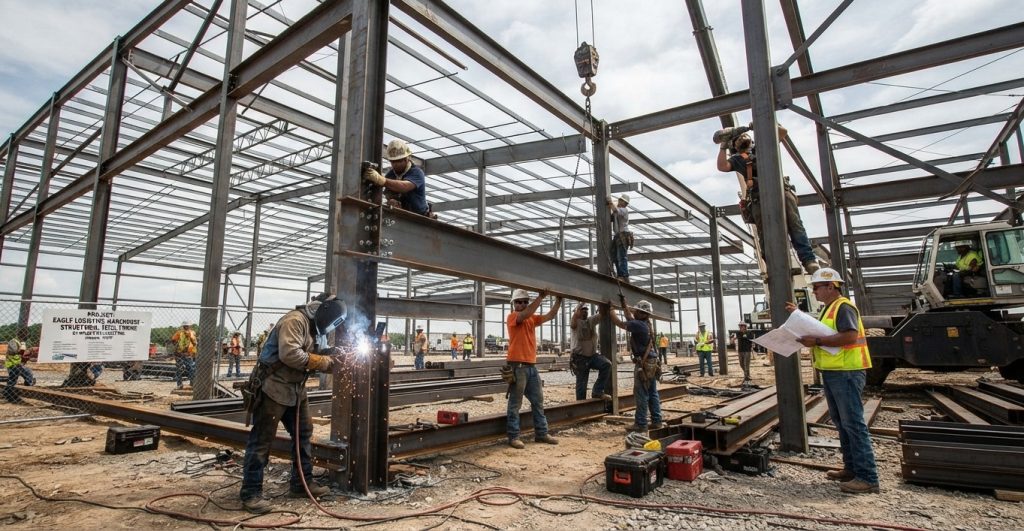
The fabricator’s job ends when certified steel arrives at your site — the erector takes it from there, though some fabricators like Richards Welding handle both. Keeping fabrication and erection under one contract removes the handoff where most field delays start.
AISC Certification — Why It Matters for Industrial Projects
AISC certification matters for industrial projects because it proves the fabricator’s quality system passed an independent audit by the American Institute of Steel Construction. Industrial owners often require it in their specifications. Certified shops also simplify special inspection, because their in-house quality control is already documented.
The AISC audit reviews written procedures, personnel qualifications, material traceability and inspection records. Under the IBC, work from a fabricator that is not approved may require special inspection of the fabricated items. That adds cost and time to an industrial schedule. Our guide to what makes an AISC certified steel fabricator explains the certification categories.
For industrial building projects that require an AISC-certified fabricator in the Southeast, Richards Welding serves NC, SC and VA from our Dunn, NC shop.
Common Mistakes When Specifying Steel for Industrial Buildings
The most common mistakes when specifying industrial structural steel are skipping AISC verification, delaying detailing, underestimating lead times, leaving surface treatment undefined and overlooking code compliance for access steel. Each one can delay erection or trigger costly rework.
- Not verifying AISC certification. Confirm the category and the facility address before award, using a steel fabrication subcontractor prequalification checklist.
- Coordinating detailing too late. Starting shop drawings after other trades are locked in leads to connection clashes and revisions.
- Underestimating lead times. Fabrication typically runs 8 to 14 weeks from approved shop drawings, so procurement should start early.
- Leaving surface treatment undefined. Specify the surface preparation, primer or galvanizing in the bid documents, not after award.
- Overlooking IBC compliance for platforms and stairs. Guards, stair geometry and live loads must be detailed to code before fabrication starts.
How Richards Welding Supports Industrial Steel Projects
Richards Welding supports industrial steel projects with AISC-certified fabrication, in-house erection and documentation ready before steel ships. The Dunn, NC shop serves industrial clients across North Carolina, South Carolina and Virginia, from warehouses to manufacturing plants.
- AISC-certified fabrication: an independently audited quality system for every industrial structural steel package.
- Full scope under one roof: CNC cutting, shearing, press brake forming, structural welding and surface preparation in Dunn, NC.
- Fabrication and erection under one contract: the same team from shop drawings through final bolt.
- Coverage across three states: in-house delivery to industrial sites in NC, SC and VA.
See the full range of capabilities at Richards Welding & Metal Fabrication.
Frequently Asked Questions About Industrial Structural Steel
What is the difference between a steel fabricator and a steel erector?
A steel fabricator produces structural members in a shop, from shop drawings through cutting, welding and coating. A steel erector installs those members on site with cranes and bolted or welded field connections. Some companies, including Richards Welding, handle both under one contract.
What steel grades are used in industrial buildings?
Industrial buildings typically use ASTM A992 for wide-flange beams and columns, ASTM A500 for hollow structural sections, and ASTM A36 for plates and angles. The engineer of record specifies the final grades for each project.
How long does structural steel fabrication take for an industrial building?
Structural steel fabrication for an industrial building typically takes 8 to 14 weeks from approved shop drawings to delivery, depending on project scope. Building size, steel availability and shop schedule affect the final timeline.
Do industrial buildings require an AISC-certified fabricator?
Not always by code, but many industrial owners require an AISC-certified fabricator in their specifications. Under the IBC, steel from a non-approved fabricator may need additional special inspection, which adds cost and time to the project.
Warehouses · Manufacturing Plants · Distribution Centers
Talk Through Your Industrial Steel Scope
Review grades, lead times and delivery sequencing with our team in Dunn, NC.
Call (919) 438-6103 Email Our EstimatorSources
- AISC, Certification Program: https://www.aisc.org/certification/
- International Code Council, 2021 International Building Code: https://codes.iccsafe.org/content/IBC2021P1
Written by the Richards Welding & Metal Fabrication team, Dunn, NC.
November 2026