Not every commercial stair carries the same load profile — a mechanical penthouse access stair or a warehouse mezzanine egress route sees foot traffic, equipment moves, and point loads that a standard office stairwell never will. Designing and fabricating heavy-duty industrial steel stairs for commercial buildings requires a different engineering approach from the start: heavier stringers, reinforced treads, and connection details sized for loads well above the code minimum. We fabricate this class of stair regularly for general contractors and developers, and this guide walks through what actually goes into specifying and building one correctly.
What Makes a Stair “Heavy-Duty” Rather Than Standard
A heavy-duty industrial stair is built to carry sustained loads well above the standard 100 psf commercial occupant load — think rolling equipment, stored material moves, or concentrated mechanical loads — and that difference shows up in stringer size, tread gauge, and connection detailing, not just in a heavier-looking finished product. Getting this classification right at the design phase determines whether the stair holds up under real operating conditions or becomes a maintenance liability within a few years.
Load Cases That Push a Stair Into Heavy-Duty Territory
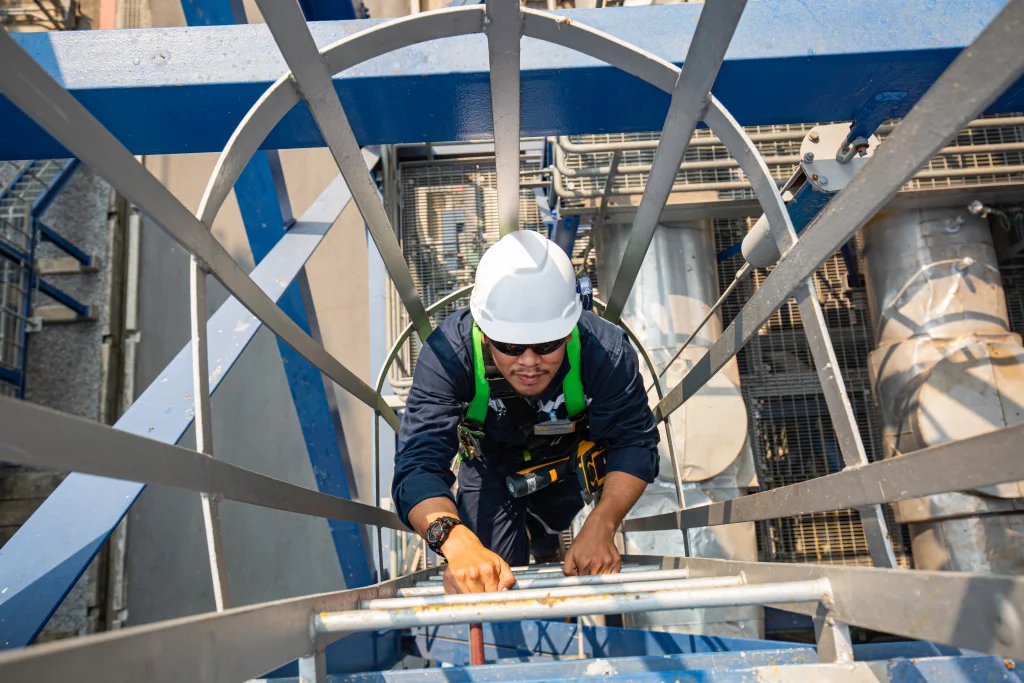
Rooftop mechanical access, warehouse mezzanine egress, and loading dock stairs regularly see point loads from equipment carts, tool boxes, and material handling that a standard commercial stair spec was never designed around. When an engineer specifies a concentrated live load above 300 lbs at any point on the tread, or when the stair sits in a path used for equipment transport rather than pure pedestrian egress, that’s the threshold where stringer size and tread gauge both need to step up from standard commercial spec.
Where These Stairs Show Up on Commercial Projects
Beyond warehouses and industrial facilities, heavy-duty stair specs show up more often than most GCs expect on multifamily, hotel, and hospital projects — rooftop mechanical rooms, back-of-house loading areas, and central plant access all call for the same reinforced approach even inside a primarily residential or hospitality building. We’ve built these stairs as part of the same package as architecturally finished stairs for multifamily projects, where the front-of-house stair and the back-of-house mechanical stair carry completely different structural specs under one project.

Structural Design Considerations for Heavy-Duty Stairs
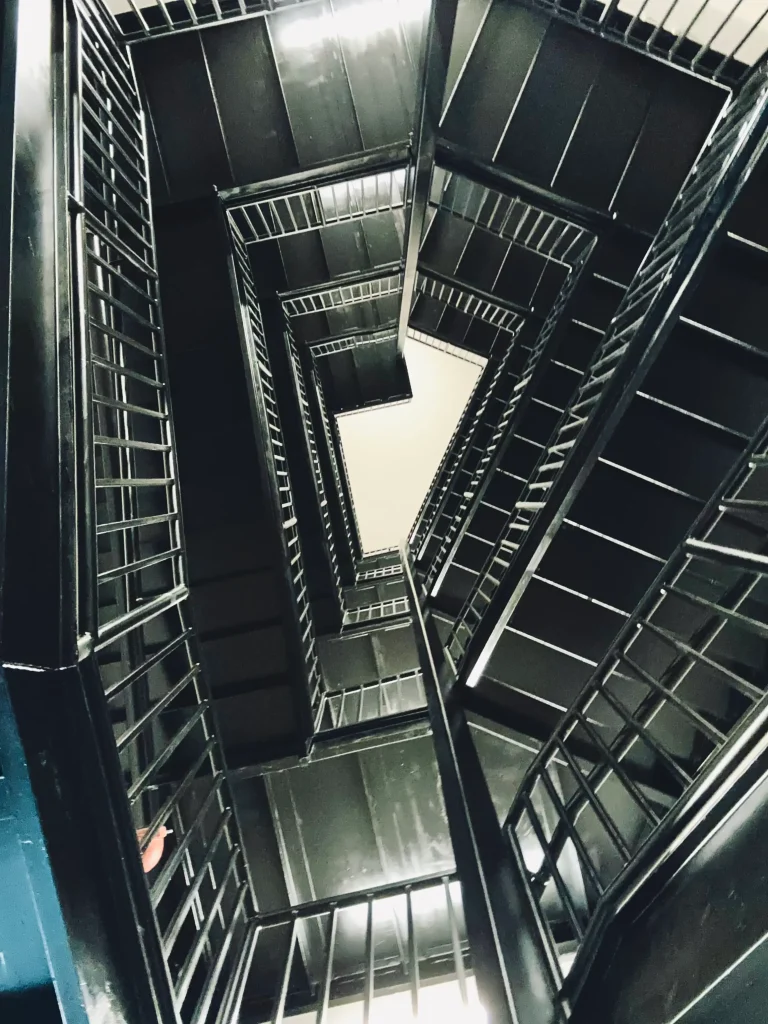
The engineering behind a heavy-duty stair starts with stringer selection and load path, since an undersized stringer will deflect excessively under repeated heavy loading long before it reaches a failure point — and excessive deflection alone can fail an inspection even if the stair never structurally fails.
Stringer Sizing and Deflection Limits
Standard commercial stairs often use formed channel or plate stringers sized to L/360 deflection limits, but heavy-duty applications typically call for structural channel or wide-flange stringers sized closer to L/240 or tighter, depending on the specified load case. We size stringers against the actual documented load — not a generic “heavy-duty” assumption — because oversizing adds unnecessary weight and cost to a connection that then has to be carried by the supporting structure above.
Tread Design: Bar Grating vs. Checkered Plate
Bar grating treads are the standard choice for industrial and mechanical stairs because they allow drainage, debris fall-through, and better slip resistance in wet or oily conditions — a meaningful safety factor in mechanical rooms and loading areas. Checkered plate treads offer a solid walking surface and slightly better load distribution for point loads from rolling equipment, but they trap water and debris, which becomes a maintenance issue in exterior or wash-down environments. The choice usually comes down to the specific environment the stair sits in, not a blanket preference.
Connection Details for Repeated Loading
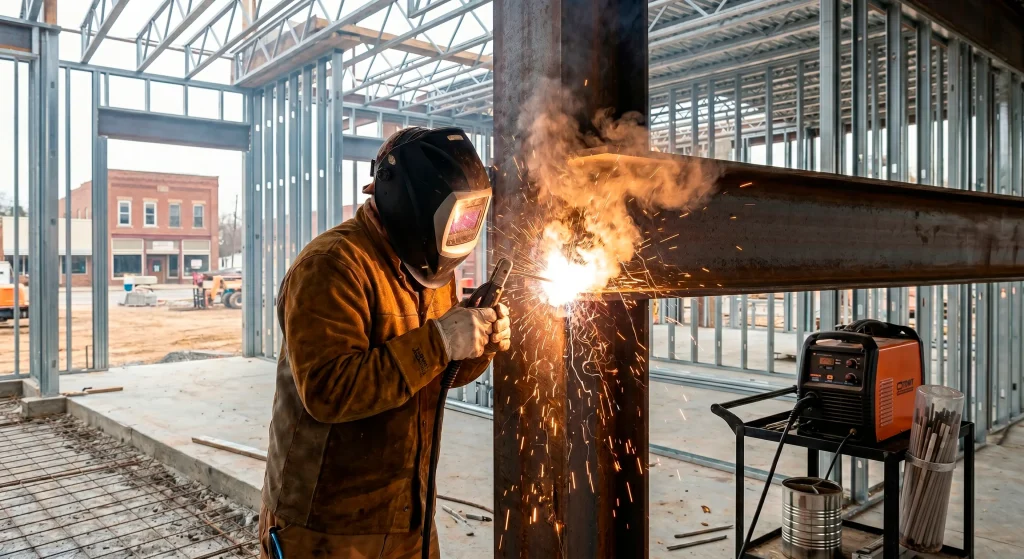
Heavy-duty stairs see more cyclical loading than standard pedestrian stairs, and that repeated stress makes connection quality — full-penetration welds versus fillet welds, bolted versus welded stringer-to-landing connections — a bigger factor in long-term performance than it is on a lighter-duty stair. We run every structural connection on these stairs through AWS-compliant welding procedures, the same standard we apply across structural steel fabrication for high-rise and mid-rise commercial buildings, because a stair that sees daily equipment traffic can’t afford a weld that was detailed for a lighter load case.
Material Selection and Corrosion Protection
Heavy-duty industrial stairs spend more time exposed to the conditions that cause corrosion — moisture, chemical exposure, temperature cycling — than a typical interior commercial stair, which makes material grade and finish system a structural durability decision, not just a cosmetic one.
Carbon Steel Grades for Structural Stringers
A36 and A572 Grade 50 are the two most common structural steel grades for heavy-duty stringers, with A572’s higher yield strength allowing for lighter sections at the same load capacity — a meaningful advantage when the stair sits on a rooftop or mezzanine where dead load matters to the supporting structure. We select grade based on the actual documented load case from the structural engineer, not a default assumption, since over-specifying grade adds cost without adding real performance benefit.
Galvanizing and Coating Systems for Exterior and Wet-Environment Stairs
Hot-dip galvanizing is close to standard practice for exterior industrial stairs and any interior stair exposed to washdown or high humidity, because it protects the entire assembly — including welds and edges that a field-applied coating often misses. For stairs in less aggressive environments, a high-build epoxy primer with a polyurethane topcoat offers strong protection at a lower upfront cost, though it carries a maintenance recoat cycle that galvanizing doesn’t. Our fabrication shop applies the same welding and finishing discipline across a wide range of heavy-use applications, from industrial stair packages to structural welding for agricultural equipment, where repeated mechanical stress and outdoor exposure demand the same durability standard.
Fabrication and Field Installation Process
Heavy-duty stairs benefit more than most fabricated components from a controlled shop environment, since the tight tolerances required for stringer-to-landing connections and tread alignment are far harder to hold consistently in the field than under shop conditions.
Shop Fabrication vs. Field Assembly
We fabricate stringers, landings, and tread assemblies in the shop under quality-controlled welding conditions, then ship pre-assembled sections to site for final connection — a sequence that minimizes field welding, which is both slower and harder to inspect reliably than shop welding. Where a project’s access constraints require the stair to break into smaller sections for site delivery, we plan those break points around the structural load path from the start, rather than cutting wherever happens to be convenient for shipping.
Coordination with Structural Steel Erection
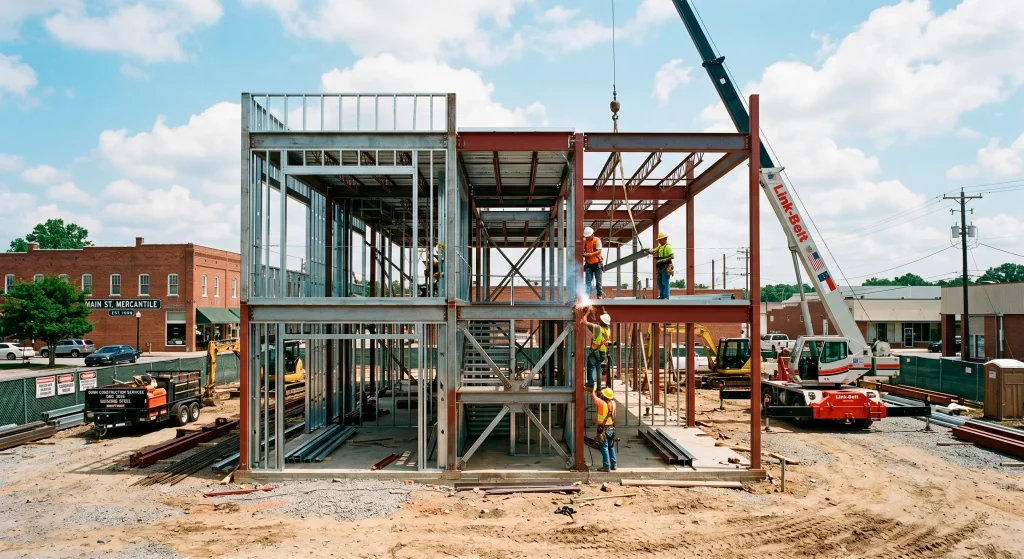
On projects where we’re also handling structural steel erection, sequencing the stair installation with the surrounding steel frame avoids the common conflict of a stair landing that doesn’t quite align with a beam that shifted slightly during erection tolerances. That same coordination discipline extends across our full fabrication capability — our team handles everything from heavy industrial stair packages to welding repairs for trailers and mobile equipment, which means the shop is set up to move between structural and mechanical scopes without losing quality control on either.
Working With a Fabricator That Understands Industrial Load Requirements
Specifying a heavy-duty stair correctly means partnering with a fabricator who asks about the actual load case — Shops offering certified structural steel fabrication — with AISC certification, AWS-compliant welding, and CNC-level dimensional accuracy — are the right fit for heavy-duty stair packages that will see real equipment and cyclical loading.equipment traffic, point loads, environment — before defaulting to a standard commercial spec, and who can back that design with AISC-certified fabrication and AWS-compliant welding. We work directly with general contractors and developers across North Carolina, South Carolina, and Virginia on multifamily, hotel, and hospital projects where the back-of-house mechanical and loading stairs need this level of engineering just as much as the front-of-house architectural stair does.
Frequently Asked Questions
What load case typically requires a “heavy-duty” stair classification?
A concentrated point load above 300 lbs at any location on the tread, or regular equipment and material transport traffic, generally pushes a stair design into heavy-duty stringer and connection specifications above standard commercial code minimums.
Is bar grating or checkered plate better for industrial stair treads?
Bar grating is generally preferred for mechanical rooms and wet or oily environments because it allows drainage and improves slip resistance, while checkered plate suits dry environments where a solid walking surface is prioritized.
Should heavy-duty stairs be hot-dip galvanized even indoors?
Interior stairs exposed to washdown, high humidity, or chemical environments benefit from galvanizing the same way exterior stairs do, since the protection covers welds and edges that a field-applied coating can miss.
Conclusion
Heavy-duty industrial steel stairs demand a design approach built around the actual load case a stair will see in service — equipment traffic, point loads, and environmental exposure — rather than a standard commercial spec applied by default. Stringer sizing, tread material, connection detailing, and finish system all need to align with that real-world use case, backed by AISC-certified fabrication and AWS-compliant welding from start to finish. If you’re specifying a heavy-duty stair package for a mechanical room, loading area, or industrial application within a larger commercial project, submit your stair specifications and our team will review the load requirements and turn around a fabrication-ready design.
Join our social networks to stay updated with our latest news and events. Don’t miss out on anything and follow our accounts today! Contact us!